Birth Card · Major Arcana 7
The Chariot as Birth Card
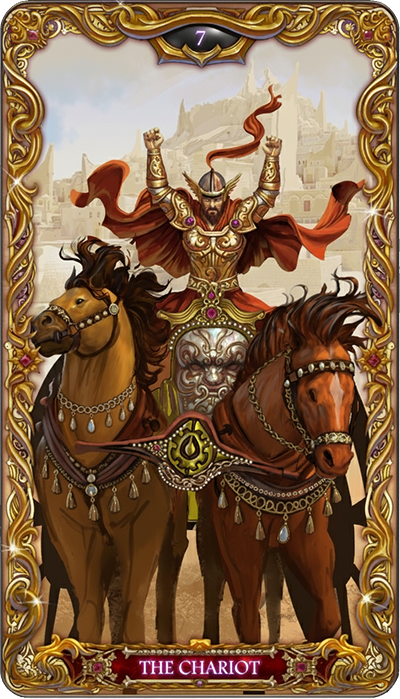
The Chariot as a birth card describes a lifelong archetype of willpower and victory, with shadow work around lack of direction and aggression.

- Card number
- Seven
- Soul card
- The Chariot (self)
- Element
- Water
- Zodiac
- Cancer
- Date-sums
- 5 → 7

Lifelong themes: willpower · victory · determination · control
The Chariot Birth Card Meaning: Lifelong Archetype and Soul Lesson
The Chariot as a Lifelong Archetype
The Chariot as a birth card describes a person whose life repeatedly asks for willpower. This is not the same as pulling The Chariot in a daily reading. A birth card is slower. It describes a recurring curriculum: the kind of challenge, gift, temptation, and maturation pattern that returns in different forms over the life arc.
The mature The Chariot person learns to embody willpower, victory, determination without becoming trapped in performance. The archetype works best when it is lived as a practice. It becomes difficult when the person treats it as an identity that must be defended. That is where lack of direction begins to appear.
Childhood and Early Patterns
Early life often introduces the The Chariot archetype through contrast. The child may be praised for one part of the card while quietly struggling with its shadow. If willpower is rewarded, the child may over-identify with competence, charm, sensitivity, resilience, or self-control. If the environment blocks the card’s natural expression, the child may learn to hide the very quality they came here to develop.
For The Chariot, the early pattern is usually a lesson in how to handle victory. The person learns whether that energy is safe to show, whether it gets attention, and whether it must be controlled to keep belonging. Later growth often means reclaiming the card’s gift without repeating the survival strategy that formed around it.
Career and Vocational Path
Vocationally, The Chariot birth-card people tend to be pulled toward work that lets them practice willpower in visible, useful ways. The exact field can vary widely. The archetype is not a job title. It is the mode of contribution. Some express it through teaching, building, healing, analysis, leadership, art, strategy, service, or crisis work.
The work becomes unhealthy when the person tries to prove the card instead of inhabit it. The Chariot’s shadow at work is lack of direction joined with aggression. That can look like overcontrol, avoidance, perfectionism, withdrawal, chasing validation, or staying loyal to a role long after it has stopped teaching anything.
Relationship Patterns
In relationships, The Chariot tends to seek partners and friends who activate the card’s central lesson. The person may attract situations that ask them to practice victory with more honesty. When mature, this archetype brings steadiness, depth, and a recognizable style of devotion. When immature, it may confuse the card’s gift with a defense.
Conflict often begins when lack of direction enters the bond. The person may expect others to understand the archetype without it being spoken, or may project the card’s shadow onto partners. Growth comes from naming the pattern plainly: “This is where my The Chariot lesson is active. This is what I am tempted to do. This is the more conscious choice.”
The Shadow Side
The shadow side of The Chariot is not failure. It is the archetype under stress: lack of direction, aggression, self-discipline lost. These patterns usually appear when the person has been using the card’s strength for too long without rest, humility, or honest reflection.
The shadow becomes less dangerous when it is treated as information. The Chariot does not ask the person to reject their gift. It asks them to stop using the gift as armor. The mature move is to let willpower serve life instead of identity.
Maturation Crises
This birth card matures through experiences that expose the limit of the old strategy. A career change, relationship ending, spiritual crisis, creative failure, health boundary, or public success can all become initiation points. The specific event matters less than the question it raises: can the person live The Chariot more honestly now?
When the crisis is handled well, determination becomes less performative and more embodied. The person no longer needs every situation to confirm the archetype. They can use it, rest from it, and let other people have different lessons.
Soul Card Layer
The soul-card layer underneath The Chariot points toward The Chariot. This adds a deeper motive to the visible birth-card pattern. The Chariot shows the life curriculum; The Chariot shows the interior gravity beneath it. Together, they explain why the same lesson appears in different relationships, jobs, and turning points.
If The Chariot is the outer path, The Chariot is the inner teacher. Work with both by asking what the visible situation is demanding and what the deeper soul pattern is trying to mature.
Working With the Archetype: Exercises
- Name the gift without proving it. Write one sentence beginning, “My The Chariot gift is…” Then write one sentence beginning, “I misuse it when…”
- Track the shadow for one week. Notice moments of lack of direction or aggression without self-punishment. The goal is recognition, not shame.
- Choose one embodied practice. Do something small that expresses willpower in action: a conversation, boundary, study session, repair attempt, creative act, or deliberate rest.
Frequently Asked Questions
What does The Chariot mean as a birth card?
The Chariot as a birth card describes a lifelong archetype of willpower, victory, determination. It is not a prediction of personality. It is the recurring lesson a person meets through choices, relationships, work, and maturation.
What is the shadow side of The Chariot as a birth card?
The shadow side is lack of direction, aggression, self-discipline lost. These patterns appear when the archetype is defended rather than lived consciously. The work is to recognize the pattern before it chooses on the person’s behalf.
How does The Chariot relate to the soul card layer?
The soul card layer shows the single-digit root underneath the birth card. For The Chariot, the soul-card interaction adds The Chariot’s themes to the life pattern, giving the archetype a deeper motive beneath its visible behavior.
Birthdates that reduce to The Chariot
Under the Arrien / Greer method, any birthdate whose digit-sum (MM + DD + YYYY) reduces to 7 maps to The Chariot. The first 5 intermediate date-sums are:
- 7 reduces to 7
- 25 reduces to 7
- 34 reduces to 7
- 43 reduces to 7
- 52 reduces to 7
Soul card
The Chariot is both a birth card and its own soul card — its number (7) is already a single digit, so no further reduction occurs. People with The Chariot as their birth card have a single unified archetype rather than a separate soul card.
Related birth cards (same soul card)
The following birth cards share The Chariot as their soul card:
- The Tower as Birth Card (Major Arcana 16)
Full card meaning
The birth-card interpretation builds on the card's full symbolism and meaning. Read the complete The Chariot tarot card meaning, including upright, reversed, love, and career interpretations.
Frequently Asked Questions
What does The Chariot mean as a birth card?
What is the shadow side of The Chariot as a birth card?
How does The Chariot relate to the soul card layer?
Tarot interpretations are intended for personal reflection and educational purposes only. Birth card archetypes are a tool for self-inquiry rooted in the Arrien / Greer numerological tradition — they do not constitute professional psychological, medical, financial, or legal advice. Always exercise your own judgement when applying these frameworks to real-life decisions.