Major Arcana · 13
Death
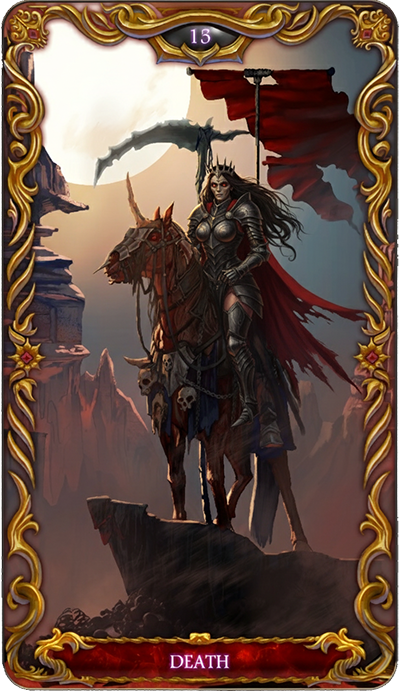
Death tarot card means an ending or transition, not usually literal death. Compare upright and reversed meanings, symbolism, love, career, and advice.

- Number
- Four
- Element
- Water
- Zodiac
- Scorpio
- Hebrew letter
- Nun

Death Tarot Card: Meaning, Reversed, Love & Career
What does Death mean?
Death means an ending, release, or transition. In ordinary tarot interpretation, it does not predict literal death. Upright, it points toward acknowledging what has completed and choosing appropriate closure. Reversed, it may reflect resistance, delayed action, or a deliberate pause before closure.
Apply the card with a three-question closure test: What observable fact shows that a chapter has ended or changed? What part remains within your control? What single act of closure, release, or deliberate recommitment follows? Within the Major Arcana sequence, Death offers a reflective method, not a frightening forecast.
Death upright meaning
Upright keywords: endings, transformation, transition, release
Upright Death asks you to recognize completion without confusing it with impulsive destruction. The evidence might be an agreement reaching its end date, a process no longer serving its stated purpose, or a role whose responsibilities have already moved elsewhere. The card favors naming that reality and deciding what a responsible ending requires.
Closure can include a handoff, a final conversation, an archive, or an explicit end date. It does not require erasing the value of what came before. Release becomes practical when you can identify what is complete, preserve what still matters, and stop extending a commitment only because ending it feels uncomfortable.
Hypothetical example: a volunteer role has fulfilled its agreed purpose, but guilt keeps the reader involved without a clear function. Death upright would not command an abrupt exit. It would support documenting the handoff, agreeing on an end date, and allowing the completed commitment to close with care.
Death reversed meaning
Reversed keywords: stagnation, fear of change, resistance
Reversed Death can describe three different conditions. Resistance keeps a finished chapter active through fear, guilt, or habit. Delayed action appears when the ending is understood but no closure step has been scheduled. A deliberate pause is different: the reader temporarily holds action while gathering relevant information or setting responsible terms.
The distinction depends on observable behavior, not a prediction. Ask whether the pause has a purpose, a review point, and a decision criterion. If none exists, delay may be preserving uncertainty. If all three exist, waiting may be a considered choice rather than avoidance.
Hypothetical example: a creative project is reopened repeatedly because archiving it feels like failure. Death reversed asks the reader to choose between one new, measurable scope with a review date or a clean archive date. Either choice is clearer than endless revision without a defined purpose.
Death in love and relationships
In love, Death can point to a relationship pattern ending or a bond changing form. It does not automatically predict a breakup. The useful question is what way of relating has demonstrably changed and whether both people can discuss closure, repair, or new expectations directly. For reconciliation and relationship-specific contexts, read the dedicated Death relationship guide.
Death in career and money
In career and money questions, Death can reflect a role, process, or work identity entering transition. Focus on controllable actions: define sunset criteria, document a handoff, preserve necessary records, and identify what decision belongs to you. A tarot card is not a reason to quit a job, invest money, or make an irreversible financial decision; use practical evidence and qualified advice where needed.
Death symbolism
In The Pictorial Key to the Tarot, A. E. Waite describes an armored horseman carrying a black banner marked by a Mystic Rose that signifies life, with distant light he calls the “sun of immortality.” His description also connects the image with change and transformation. A concise source copy is available through the Internet Archive.
Tarotologist interprets these details reflectively: the moving rider can focus attention on change that continues despite different responses, while the life-signifying rose keeps the image from becoming only a symbol of loss. This is a modern reading of the image, not a claim that the card predicts a physical event.
Correspondences
In this site’s Hermetic correspondence system, Death uses the following values. These attributions are system-specific rather than universal or empirical facts.
Death is attributed to Water, Scorpio, and the letter Nun in the Golden Dawn / Book T system.
Death tarot combinations
- Death and The Tower: ending and disruption appear together; examine what has completed and what structure is changing.
- Death and The Star: closure is followed by a quieter orientation toward hope and repair.
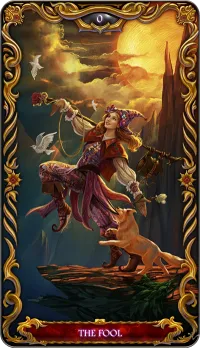 Death + The Fool: a completed chapter may leave space to approach an unfamiliar beginning.
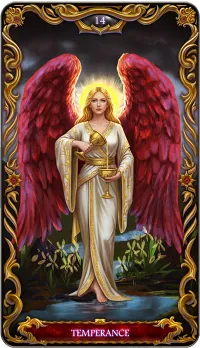 Death + Temperance: change may need integration rather than speed.
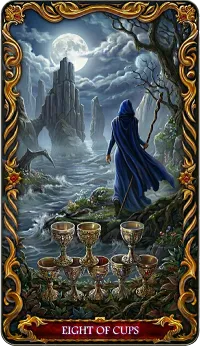 Death + Eight of Cups: the pair emphasizes acknowledging departure and choosing how to leave responsibly.
Each combination depends on the question and spread position. The pair pages explore their specific interactions without turning either card into a guaranteed outcome.
How to apply Death in a reading
Return to the closure test: identify the evidence of completion, separate what is fixed from what remains within your control, and choose one act of closure or recommitment. This keeps the interpretation tied to the reader’s situation instead of treating the card as proof that an event must occur.
Hypothetical scenario: a recurring committee meeting continues although its project has ended. The completed deliverable is the observable evidence; the reader controls whether to propose a final review and archive the notes. Death suggests comparing a documented closeout with a clearly defined new mandate, not assuming that the group must disappear.
For questions framed as a binary verdict, Death as a yes-or-no card explains that separate reading system. The general meaning here remains reflective and non-deterministic.