Major Arcana · 7
The Chariot
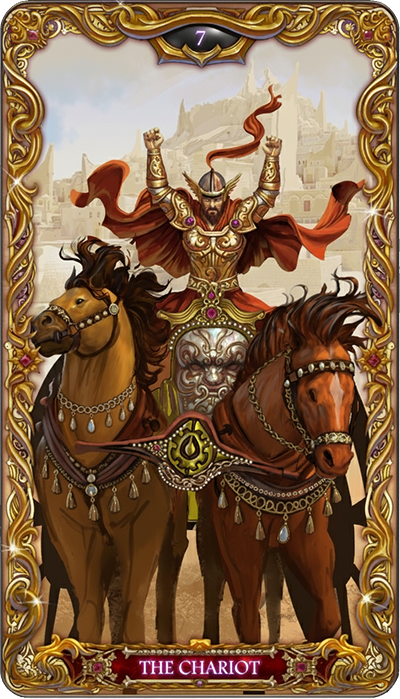
The Chariot tarot card means focused direction and disciplined action. Compare upright and reversed meanings, then apply it in love and career readings.

- Number
- Seven
- Element
- Water
- Zodiac
- Cancer
- Hebrew letter
- Cheth

The Chariot Tarot Card: Meaning, Reversed, Love & Career
What does The Chariot mean?
The Chariot means choosing a destination and bringing competing pressures into alignment. Upright, it reflects disciplined direction and self-command. Reversed, it can point to intense effort that is divided, misdirected, or held together by force rather than coordination.
Use the card as a three-part test: What destination is being chosen? What pressures are pulling apart? What next observable action would demonstrate direction without coercion? Like other cards in the wider Major Arcana sequence, The Chariot describes a pattern to reflect on rather than a guaranteed outcome.
The Chariot upright meaning
Upright keywords: willpower, victory, determination, control
Upright, The Chariot is the card of chosen direction. It asks you to gather your effort around a defined destination instead of letting every competing impulse take the reins. Its strength begins with self-command, not domination.
It can be especially useful when two legitimate commitments pull against each other. The task is not to erase one side, but to decide what both must serve and how each will be handled.
Hypothetical upright example: suppose work requires a major deadline while a family commitment also needs your presence. The Chariot does not promise that doing more will solve the conflict. It invites you to define the destination—meeting the deadline without abandoning the relationship—then assign boundaries, time, and one next action to that choice.
The lesson is to keep your hands on the reins: know the destination, organize your energy, and do not confuse intensity with direction.
The Chariot reversed meaning
Reversed keywords: lack of direction, aggression, self-discipline lost
Reversed, The Chariot often shows power that is divided or misdirected—not an absence of power. You may be pushing hard while the goal, priorities, or measure of progress keeps changing.
Hypothetical reversed example: imagine revising a project every day, first to make it faster, then more comprehensive, then more impressive. The effort is real, yet there is no progress because the definition of success moves each time the work approaches completion. The reversal asks you to choose one criterion before applying more force.
In conflict, reversed The Chariot can warn against trying to force a win. Control is not the same as self-command, especially when the situation requires cooperation.
The reflective correction is to pause, name the destination again, and remove any action that does not serve it. Let resolve become consistent rather than dramatic.
The Chariot in love and relationships
In love, The Chariot asks whether both people are moving toward a shared understanding or simply pressing for their preferred pace. Upright, it can reflect clear intention and coordinated effort; reversed, it can expose push-pull dynamics or control replacing agreement.
For relationship and reconciliation contexts, see the deeper love guide for The Chariot.
The Chariot in career and money
In career readings, The Chariot asks you to choose the priority that other tasks must serve. It supports clear deadlines, defined responsibilities, and disciplined execution without guaranteeing a promotion, launch, or result.
In a money context, keep the reading reflective: examine whether your actions follow a stated priority or compete with one another. Reversed, the card can point to trying to solve a planning problem by applying more pressure; it is not financial advice.
The Chariot symbolism
In the Rider–Waite–Smith image created by Pamela Colman Smith, a charioteer stands above two sphinxes. A. E. Waite’s published discussion frames the figure through conquest and triumph. These are historical details of that deck and text, not proof that a reading guarantees victory.
Tarotologist’s reflective interpretation takes the contrasting sphinxes as a prompt about steering competing pressures without erasing them. In that modern synthesis, meaningful movement comes from organizing effort around a chosen path. See Waite’s historical description in The Pictorial Key to the Tarot.
Correspondences
The following are Golden Dawn/Hermetic-system attributions used by this site, not universal facts about The Chariot.
The Chariot is attributed to Water, Cancer, and the letter Cheth in the Golden Dawn / Book T system.
The Chariot tarot combinations
- Strength and The Chariot: Steady courage and chosen direction work together without relying on force.
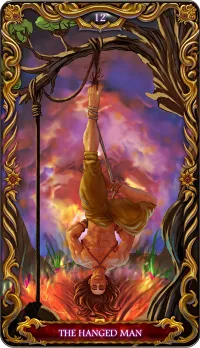 The Chariot + The Hanged Man: Purposeful movement meets purposeful pause; perspective may need to change before action becomes useful.
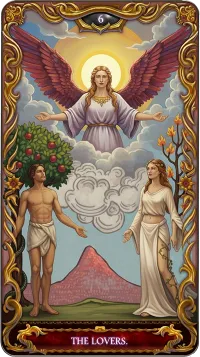 The Chariot + The Lovers: A choice must become direction; values need action.
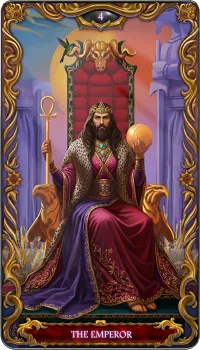 The Chariot + The Emperor: Leadership, strategy, and command create forward momentum.
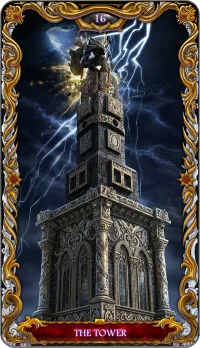 The Chariot + The Tower: Disruption challenges the current direction and asks what can still be steered.
How to apply The Chariot in a reading
Begin with three questions: What destination is being chosen? What pressures are pulling apart? What next observable step would demonstrate direction without coercion? These questions turn the card’s imagery into a practical reflection without treating tarot as a command.
Hypothetical mini-scenario: if a person is deciding whether to continue a project, an upright Chariot might ask them to define the finished outcome and schedule the next deliverable. Reversed, it might ask them to stop changing the goal long enough to see whether their effort actually serves it. For a deliberately binary framework, use the separate guide to The Chariot as a yes-or-no answer.