Major Arcana · 8
Strength

Strength Tarot Card Meaning: Discover courage, compassion, and inner power. Explore interpretations for love and career, and understand its profound symbolism.

- Numerology
- Eight
- Element
- Fire
- Zodiac
- Leo
- Hebrew letter
- Teth

Strength Tarot Card: Meaning, Reversed, Love & Career
What does Strength mean?
Strength means inner courage, emotional steadiness, and the power of compassion over force. It describes the moment when you tame fear or instinct by staying present with it. Reversed, Strength can show self-doubt, exhaustion, or trying to control something that needs patience instead.
Strength upright meaning
Upright keywords: inner strength, courage, compassion, gentle power
Upright, Strength is the card of calm power. It is not the loud kind of strength that proves itself by winning a fight. It is the quieter mastery that holds steady when something inside you wants to panic, lash out, give up, or make the situation smaller than it really is.
In the Rider-Waite-Smith image, the woman does not wrestle the lion into submission. Her hands are gentle. The lion is powerful, but it is not treated as an enemy. That is the heart of this card: instinct becomes trustworthy when it is met with attention, patience, and respect.
In a reading, Strength often appears when courage is needed, but the courage may look softer than expected. It may be the courage to stay kind during conflict, to speak honestly without aggression, to keep showing up for healing, or to trust your own resilience after a discouraging period.
This card can also point to emotional maturity. You may have intense feelings, strong desire, anger, grief, or fear, but those feelings do not have to drive the whole story. Strength asks you to bring the wise self closer to the animal self. Not to shame it. Not to silence it. To guide it.
The practical message is simple: do not underestimate gentleness when it is backed by real commitment. Strength says you have more inner steadiness available than the situation may be showing on the surface.
Strength reversed meaning
Reversed keywords: self-doubt, weakness, lack of self-belief
Strength reversed at a glance
- Confidence under strain: Self-doubt, second-guessing, or feeling close to your limit.
- Force instead of steadiness: Pushing through burnout or demanding instant control can deepen the strain.
- Vulnerability needs room: Rest, reassurance, and support can be part of rebuilding confidence.
- Reactivity or control: Name the feeling underneath before trying to manage the situation or another person.
Reversed, Strength asks where confidence has become strained. You may be doubting yourself, second-guessing your instincts, or feeling as though one more demand will push you past your limit. This reversal often appears when the outer world sees you as capable, but your inner experience is fatigue, tenderness, or fear.
Sometimes Strength reversed shows the shadow of force. Instead of working with the lion, you may be trying to dominate it. That can look like pushing through burnout, suppressing anger until it leaks out sideways, or demanding instant emotional control when the real work requires patience.
It can also point to shame around vulnerability. If you believe strength means never needing reassurance, never resting, never admitting fear, the reversal gently challenges that belief. Real courage includes knowing when to soften, ask for support, and rebuild your confidence one honest step at a time.
In relationship readings, Strength reversed may show insecurity, emotional reactivity, or one person trying to manage the other instead of naming the feeling underneath. In practical readings, it may ask you to stop muscling through and restore the inner conditions that make steady action possible.
The medicine is not to become harder. It is to become more present. Strength reversed says your power returns when you stop fighting yourself and start tending the part of you that feels afraid.
Strength in love and relationships
In love, Strength points to patience, tenderness, attraction, and the ability to stay emotionally present without trying to overpower the bond. It favors gentle honesty over ultimatums. Reversed, it can show insecurity, jealousy, low confidence, or a dynamic where someone is confusing control with care.
Strength in career and money
In career and money, Strength supports persistence, calm leadership, and skill under pressure. It is useful when progress depends on discipline rather than speed. Reversed, it may show burnout, imposter feelings, or a need to stop forcing output and rebuild confidence through a clearer plan.
Strength symbolism
Strength traditionally shows a woman calmly touching or closing the mouth of a lion. The lion represents instinct, appetite, anger, desire, and raw life force. The woman represents conscious presence. The infinity symbol above her head points to spiritual patience and ongoing inner mastery. The card teaches that the strongest hand is not always the hardest one.
How Strength’s image and number vary
The familiar Rider-Waite-Smith scene is one named version of Strength, not a picture shared by every historical card. The Morgan Library’s Fortitude card M.630.8, catalogued circa 1450–1480, shows a male figure raising a club above a lion.
Numbering and handling differ too. The V&A catalogue record for a Marseille-pattern La Force gives the inscription “XI La Force” and describes a figure holding a creature’s mouth open; the record provides no online image of that object. In chapter VIII, “Strength, or Fortitude,” of The Pictorial Key to the Tarot, A. E. Waite instead describes a woman closing a lion’s jaws with a chain of flowers joining them, and says he interchanged Strength with Justice.
These examples do not establish a single line of evolution or one meaning for every deck. They show why the image, number, and interpretation should be tied to a named object or system; this page’s emphasis on compassionate self-command is Tarotologist’s reflective reading of the Rider-Waite-Smith image.
How named texts interpret Strength
In Mathers’s 1888 text, available here as a modern reconstructed and annotated reproduction, the method is explicitly based on Italian packs and calls Strength or Fortitude Key 11. Its upright list centers power, might, force, strength, and fortitude; its reversed list turns to abuse of power, overbearingness, and a want of fortitude. These are meanings recorded by one author using a stated method, not a guide to every Italian or Marseille deck.
Waite’s 1911 Fortitude entry on printed page 146 places the card at 8 and records a related but different range: power, energy, action, courage, and magnanimity upright, with despotism, abuse of power, weakness, and discord among the reversals. Waite then calls many fortune-telling assignments artificial and arbitrary on printed page 147, so the list is evidence of his text rather than a universal rule or a guaranteed outcome. Tarotologist’s emphasis on compassionate self-command is a separate house interpretation that can be compared with both lists without erasing their differences.
Correspondences
Strength is attributed to Fire, Leo, and the letter Teth in the Golden Dawn / Book T system.
Strength tarot combinations
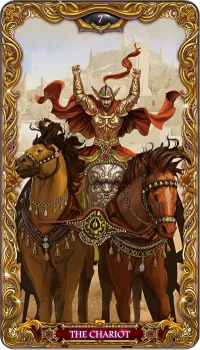 Strength + The Chariot: discipline becomes effective when willpower is guided by emotional maturity.
 Strength + The Tower: a destabilizing moment requires calm response instead of panic.
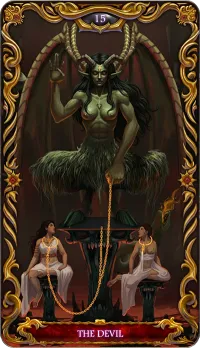 Strength + The Devil: desire, habit, or attachment is asking for compassionate self-command.
 Strength + Temperance: healing happens through patience, moderation, and steady integration.
 Strength + The Lovers: a relationship needs honest courage and tenderness at the same time.
 Strength + Nine of Wands: resilience is real, but rest and gentleness matter too.
Strength + The Fool: In Tarotologist’s house reading, Strength’s calm self-command gives The Fool’s open beginning a steady center, while The Fool keeps patience from hardening into overcontrol. In a supportive position, the pair can favor curious experimentation held by clear awareness; in tension, it can ask whether caution is protecting the next step or suppressing it. Let the question, each card’s orientation, and spread position decide which relationship is active.
A first-person reading example
I would read Strength here as a sign that the answer is not to push harder. The situation has energy, feeling, and maybe even fear in it, but the card asks you to meet all of that with steadiness. If this is about love, I would look for the brave conversation that can happen without blame. If it is about work, I would ask where consistency matters more than proving yourself today. The next step is not weak because it is gentle. It is strong because it keeps you connected to yourself while you act.
Frequently asked questions
Is Strength a yes or no card?
Strength often leans yes when the question involves patience, courage, healing, or staying steady through pressure. It is less supportive of impulsive action. If the card is reversed, the answer may be not yet, especially if confidence, rest, or emotional balance needs repair first.
What does Strength mean in a love reading?
In love, Strength points to patience, attraction, tenderness, and emotional courage. It asks whether both people can stay present without overpowering each other. Reversed, it may show insecurity, jealousy, low confidence, or the need to rebuild trust gently.
What does Strength reversed mean?
Strength reversed often means self-doubt, depleted confidence, or force being used where compassion would work better. It can also show burnout or emotional reactivity. The card asks you to restore steadiness instead of pretending you are unaffected.
Is Strength a negative card?
Strength is not a negative card. It describes the work of meeting instinct, fear, desire, or pressure with compassion and courage. The challenging side appears when confidence is low or when someone mistakes control for true inner strength.
What is Strength associated with?
Strength is associated with Leo, the fire element, numerology 8, and the Hebrew letter Teth. These correspondences emphasize vitality, courage, heart, endurance, and the disciplined relationship between instinct and conscious choice.
What does Strength mean for career?
For career, Strength favors persistence, calm leadership, and confidence built through practice. It can point to handling pressure gracefully. Reversed, it may show burnout, imposter feelings, or the need to rebuild capacity before taking on more.