Minor Arcana · Wands · Four
Four of Wands
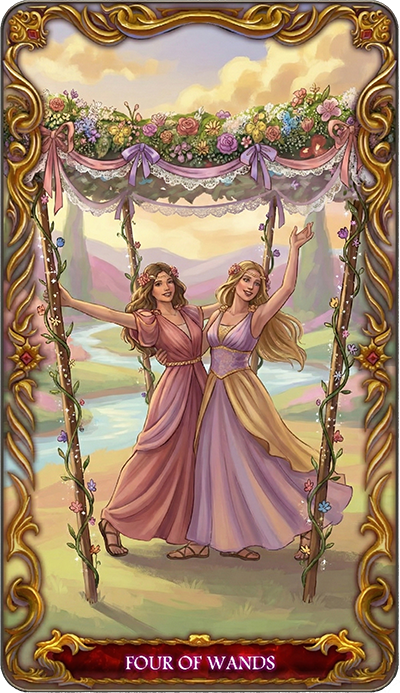
The Four of Wands means celebration, belonging, home, and a milestone worth marking. Explore upright, reversed, love, career, and yes/no meanings.

- Suit
- Wands
- Rank
- Four
- Number
- Four
- Element
- Fire

Four of Wands Tarot Card: Meaning, Reversed, Love & Career
What does the Four of Wands mean?
The Four of Wands means celebration, belonging, home, and a milestone worth marking. It can describe the point when effort becomes shared joy: a gathering, a team achievement, a relationship step, or a moment of feeling welcomed. Reversed, it may raise questions about delayed recognition, private happiness, changing home circumstances, or support that is less stable than it appears.
As part of the Suit of Wands, the card brings fire’s movement and initiative into a structure people can gather around. Its message is not that a particular event will happen, but that recognition and belonging deserve practical attention.
Four of Wands upright meaning
Upright keywords: celebration, home, milestone, community
Four staves and a suspended garland frame the Rider-Waite-Smith scene, while two figures hold flowers beyond them. Tarotologist reads this threshold as a pause where work can be recognized and joy can be shared.
Upright, the Four of Wands may point to a homecoming, graduation, gathering, project launch, relationship milestone, or a quieter sense of arrival. The whole journey does not need to be finished before progress is named. What has become stable enough to appreciate, and who helped make it possible?
Four of Wands reversed meaning
Reversed keywords: transition, instability at home
There is more than one reversal convention for this card. A. E. Waite retained substantially positive meanings when the Four of Wands was reversed. Many modern readings, including Tarotologist’s approach, also consider delayed celebration, joy kept private, changing home circumstances, or an unsettled foundation. Neither method fixes the future; the question and surrounding cards help determine which lens is useful.
Reversed, the card may ask whether a milestone is being rushed, postponed, or performed for other people. It can also point to a celebration that matters even without public approval. What would make belonging tangible here, and what part of the foundation needs honest care before the next step?
Four of Wands in love and relationships
Upright, the Four of Wands can reflect welcome, commitment, shared celebration, or the practical work of creating a home together. Rather than guaranteeing engagement or marriage, it asks whether both people can participate in a relationship that feels supportive and openly valued.
Reversed, attention may turn to timing, living arrangements, family pressure, or a public image of harmony that does not match private experience. The useful question is not “Will this relationship reach a milestone?” but “What agreements and forms of support would make that milestone meaningful?” Explore these situations in the deeper Four of Wands relationship guide.
Is the Four of Wands yes or no?
In Tarotologist’s binary system, the Four of Wands leans yes. The strongest support is for choices connected with honest celebration, shared effort, belonging, or a stable next step. A reversal or difficult surrounding cards may qualify the conditions, and the result remains a reflective prompt rather than objective certainty. The Four of Wands yes or no guide explains the site’s full method.
Four of Wands in career and money
For career questions, the Four of Wands can mark a team win, completed phase, successful launch, or workplace where contribution is recognized. It suggests pausing long enough to name what worked and who contributed before beginning the next push.
Reversed, the card may reflect a delayed milestone, uneven team culture, or success acknowledged away from the spotlight. In money questions, keep the focus on what a milestone means and how stable its support is; the card does not promise income or a financial result.
Four of Wands symbolism and source
The scene contains four staves, a suspended garland, two figures carrying flowers, a bridge or moat, and a large house beyond. Those are depicted details. Tarotologist interprets their arrangement as a threshold between effort and recognition: the garland suggests an occasion being marked, while the people and house bring themes of welcome, safety, and community.
A. E. Waite’s description of the Four of Wands is the primary source for these scene details and traditional terms. The modern reflective applications on this page are Tarotologist interpretations, not predictions contained in the image.
Correspondences
- ElementFire
Four of Wands is attributed to Fire in the Golden Dawn / Book T system.
Four of Wands tarot combinations
Card pairings offer interpretive possibilities rather than fixed outcomes:
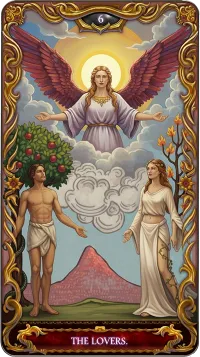 Four of Wands + The Lovers: a relationship milestone may call for shared values and a conscious choice.
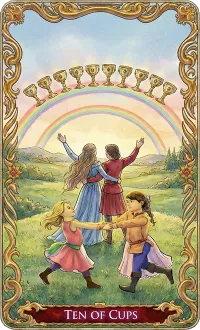 Four of Wands + Ten of Cups: home, family joy, and emotional belonging may become central.
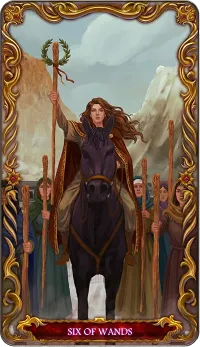 Four of Wands + Six of Wands: individual achievement may become a shared celebration.
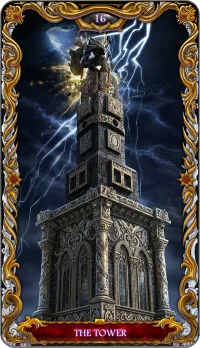 Four of Wands + The Tower: a home or group structure may need honest rebuilding.
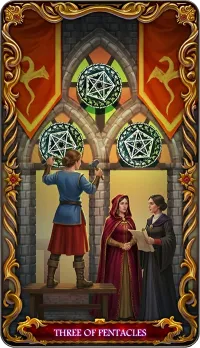 Four of Wands + Three of Pentacles: teamwork may create a milestone worth recognizing.
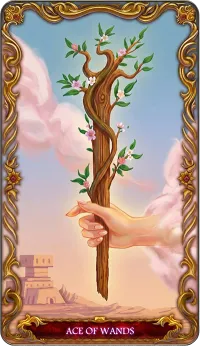 Four of Wands + Ace of Wands: a new creative spark may find support through community.
Worked reading prompts
Use the card’s scene as a threshold between effort and recognition, then ask:
- What progress deserves to be named before attention moves to the next goal?
- Where is belonging demonstrated through actions, agreements, and welcome?
- Who contributed to this milestone, and how can their role be acknowledged?
- If the card is reversed, is the celebration delayed, intentionally private, or resting on a foundation that needs repair?
- What would make home, community, or teamwork feel more stable without pretending everything is complete?
These prompts keep the Four of Wands grounded in the reader’s choices. They do not assume that a wedding, homecoming, promotion, or other event will occur.